Mapped: What Would the Herbert Smith Freehills & Kramer Levin Merger Look Like?

14 November 2024

Earlier this week, Herbert Smith Freehills and Kramer Levin announced their plans to merge. The combination would create a law firm of around 2,700 lawyers and $2 billion of revenue. The Partner vote is due to take place in February 2025 and if approved, the merged firm would rank in the top 25 globally.


Using publicly-available data from Pirical Legal Professionals (PLP), we've taken a look at which locations & practices would grow under the merger and where Herbert Smith Freehills might sit relative to rival UK firms seeking to expand in the United States.

Herbert Smith Freehills will gain a stronger foothold in the US if the merger with Kramer Levin goes ahead

Global map of Herbert Smith Freehills office locations
Global map of Herbert Smith Freehills office locations with Kramer Levin growth areas

Both firms have similar levels of practice area depth and would strengthen shared practices such as Litigation, Corporate and Finance
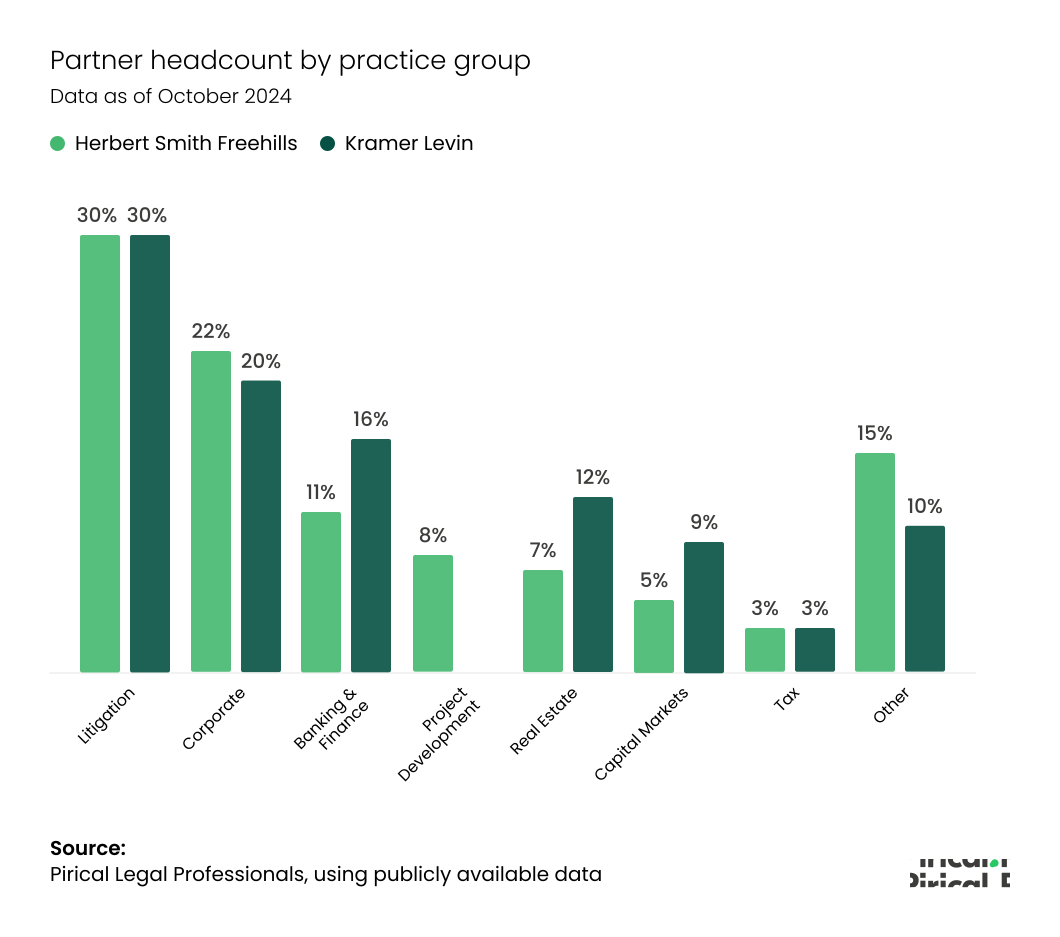
Practice area depth comparison - Herbert Smith Freehills and Kramer Levin

Herbert Smith Freehills could catch up with UK rivals in the US should the merger go ahead

US Partner headcount, top UK law firms

Both firms can expect to lose a small number of Partners between now and the completion of the merger

Partner headcount decline between merger announcement and completion, sample of recent mergers

Written using data from Pirical Legal Professionals (PLP)

Unlock unparalleled coverage of the legal market


Global attorney database built with the most comprehensive sources of data on the market. Designed for law firm lateral hiring teams, legal headhunters and strategy planners, our data tracks over 615,000 profiles across 130+ countries. PLP enables firms to source talent quicker, leverage their own network for referral opportunities, map out competitors’ org structures, research new markets and much more.

Try PLP for 1 hour

Subscribe to the latest data insights & blog updates


Fresh, original content for Law Firms and Legal Recruiters interested in data, diversity & inclusion, legal market insights, recruitment, and legal practice management.
Get updates via email
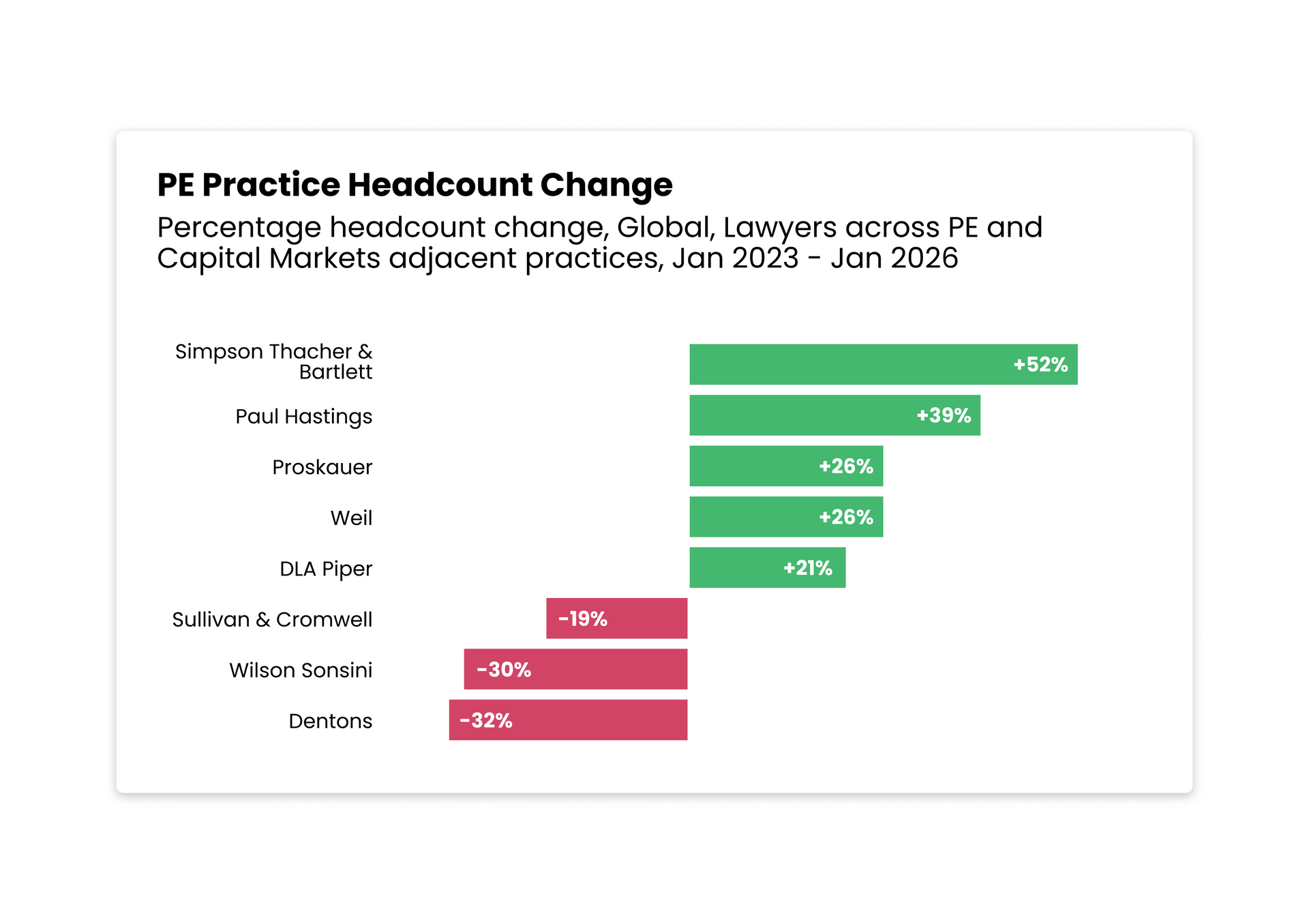
Bar chart showing percentage headcount change in PE practices from Jan 2021 to Jan 2022 across eight global law firms.
by Craig Savitzky 14 April 2026
Pirical data tracking 50,000+ lawyers across PE and capital markets practices reveals a three-year talent reshaping more dramatic than the numbers indicate.
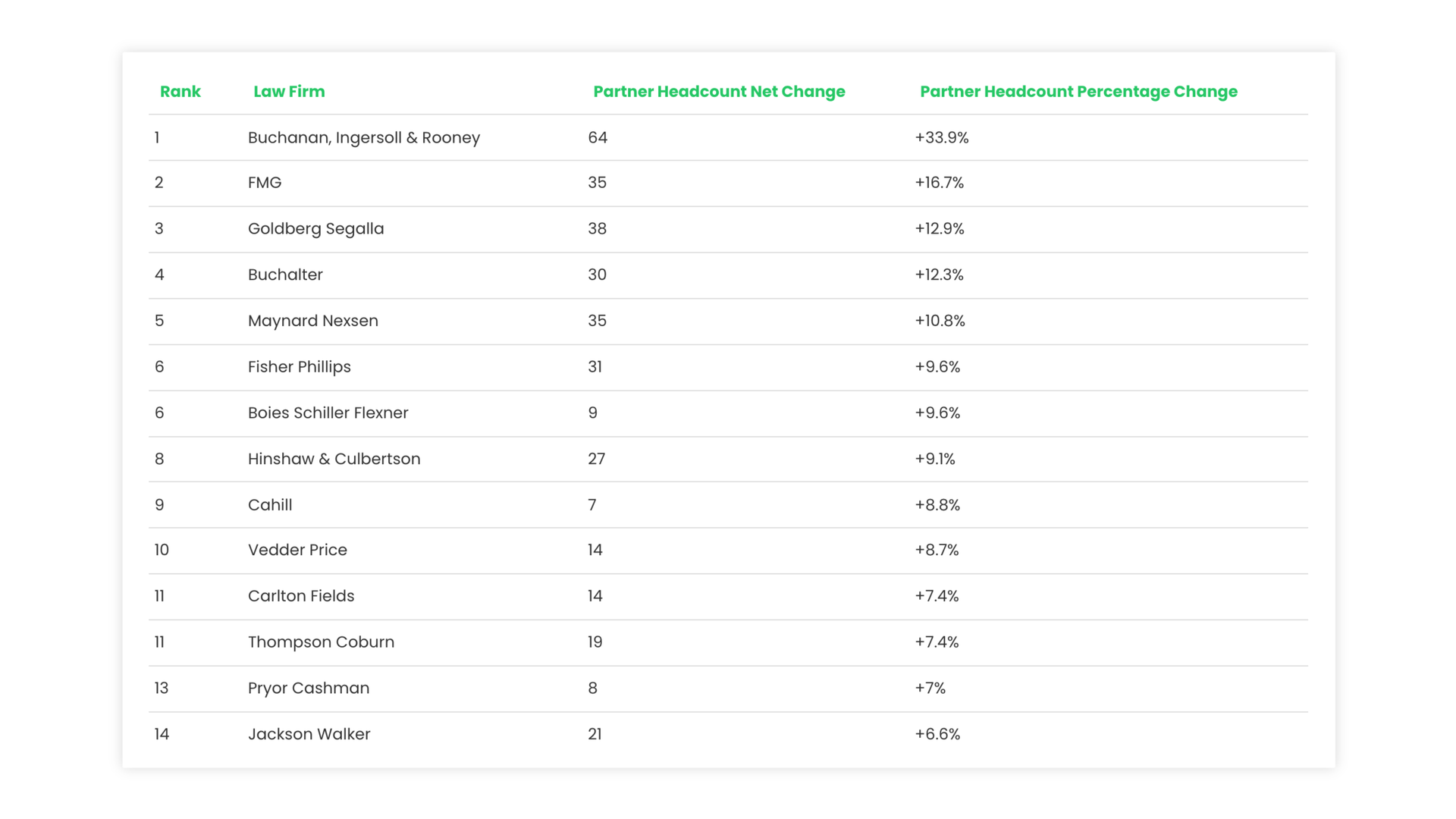
A table listing the top 14 Law Firms in the AM Law 101-200 by growth in Partner headcount
by Emily Turner 9 April 2026
See Pirical's Ranking of Which AM Law 101-200 Law Firms Have Seen the Most Significant Growth in the Past Year
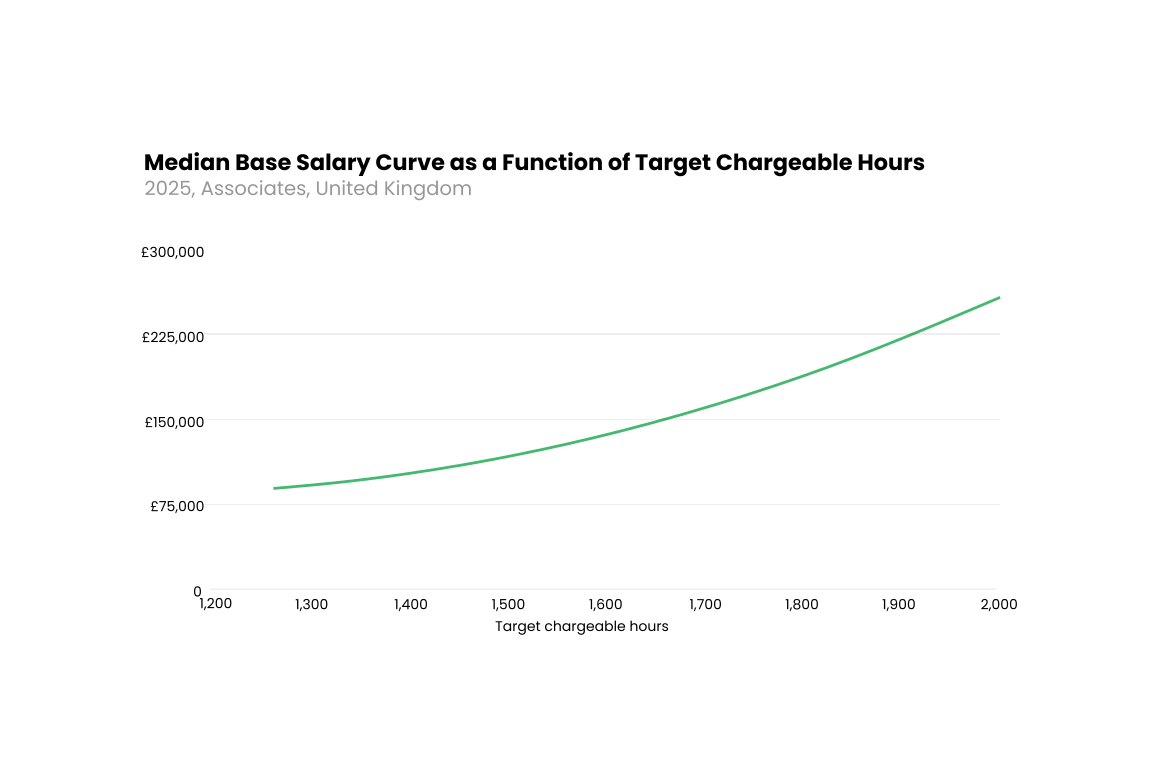
A line graph titled
8 April 2026
Pirical has been working with customers to diagnose their current state of productivity and to test ideas about what really drives productivity across the market.
by Lakshana Susinthiran 7 April 2026
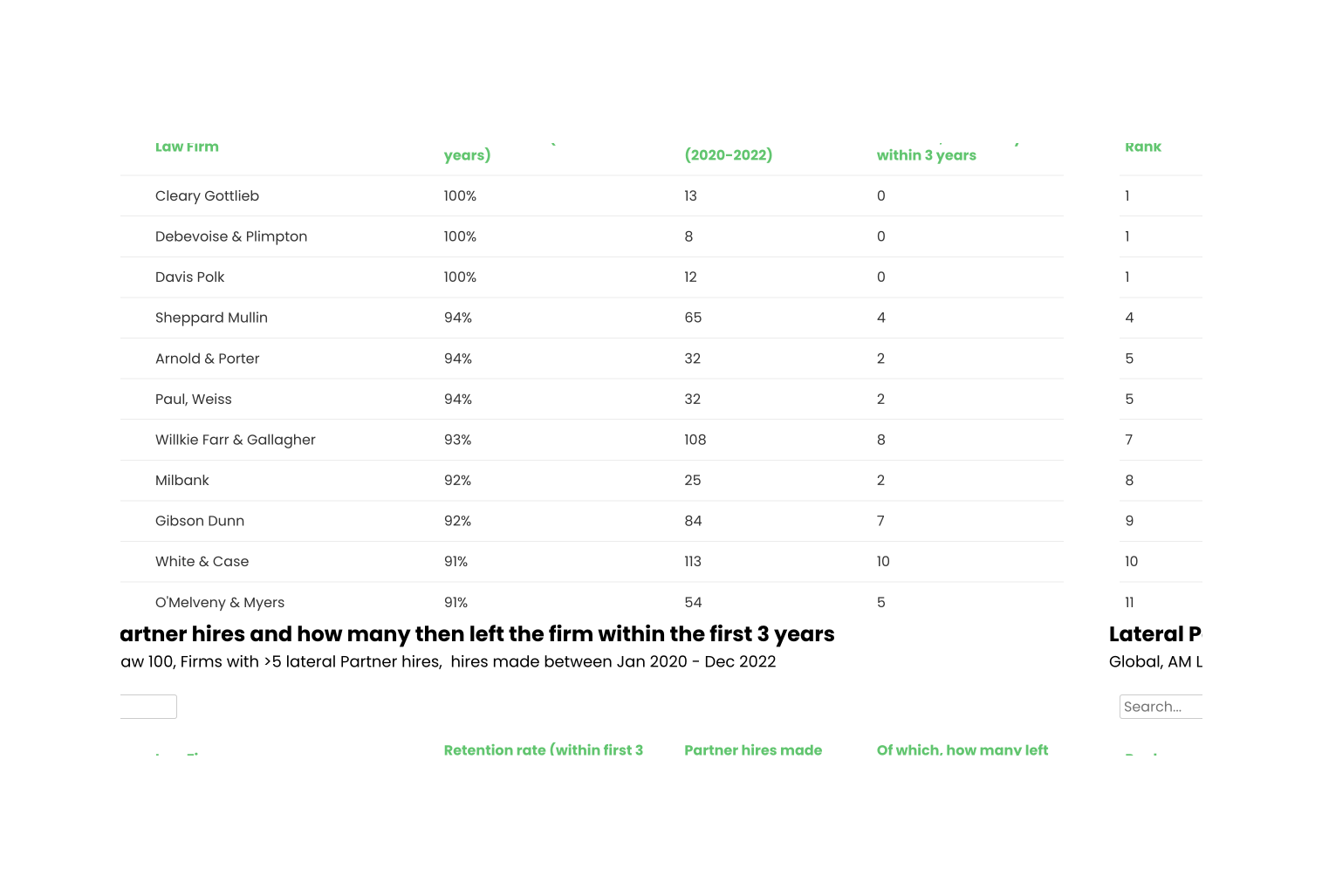
Lateral Partner retention is a vital metric for law firms. "Each year, law firms invest countless hours, money, and resources in their lateral hiring efforts" , so the success rate of each lateral hire has significant implications to any firm. Based on input from a number of firms, a key window for a lateral Partner hire is the first 3 years from joining. Within that timeframe, most firms will have a sense of whether the hire is going to be a success, or not! Using publicly-available data tracked by Pirical , we've analyzed how many of the lateral Partner hires made by AM Law 100 firms between 2020-2022 exited the firm within 3 years of joining.
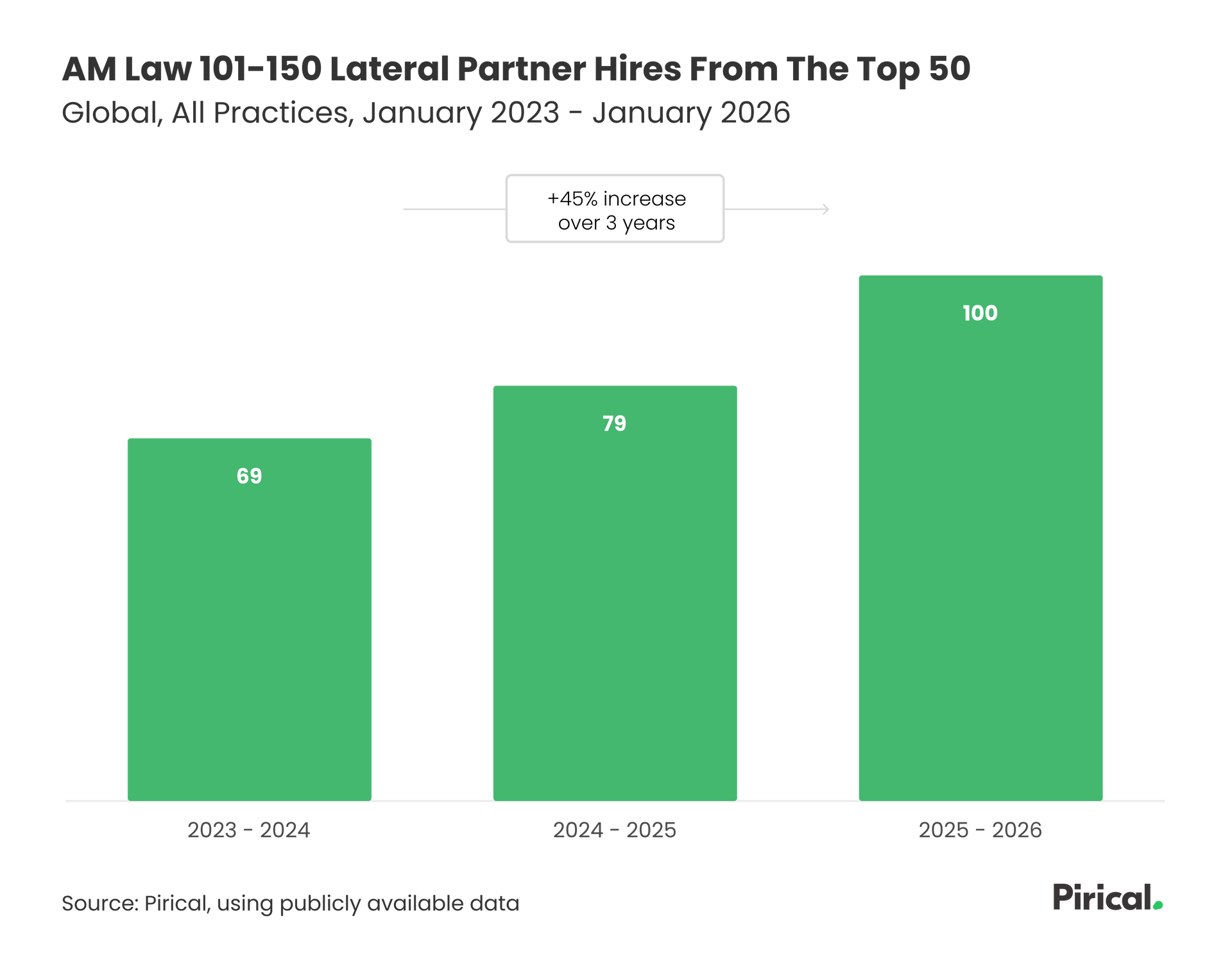
Chart of top 50 lateral hiring over time, increasing trend from Jan 2023 to Jan 2026. Green bars.
by Emily Turner 31 March 2026
The Volume of Lateral Moves From AM Law 1-50 to 101-150 Firms has Increased by +45% Over the Last 3 Years.
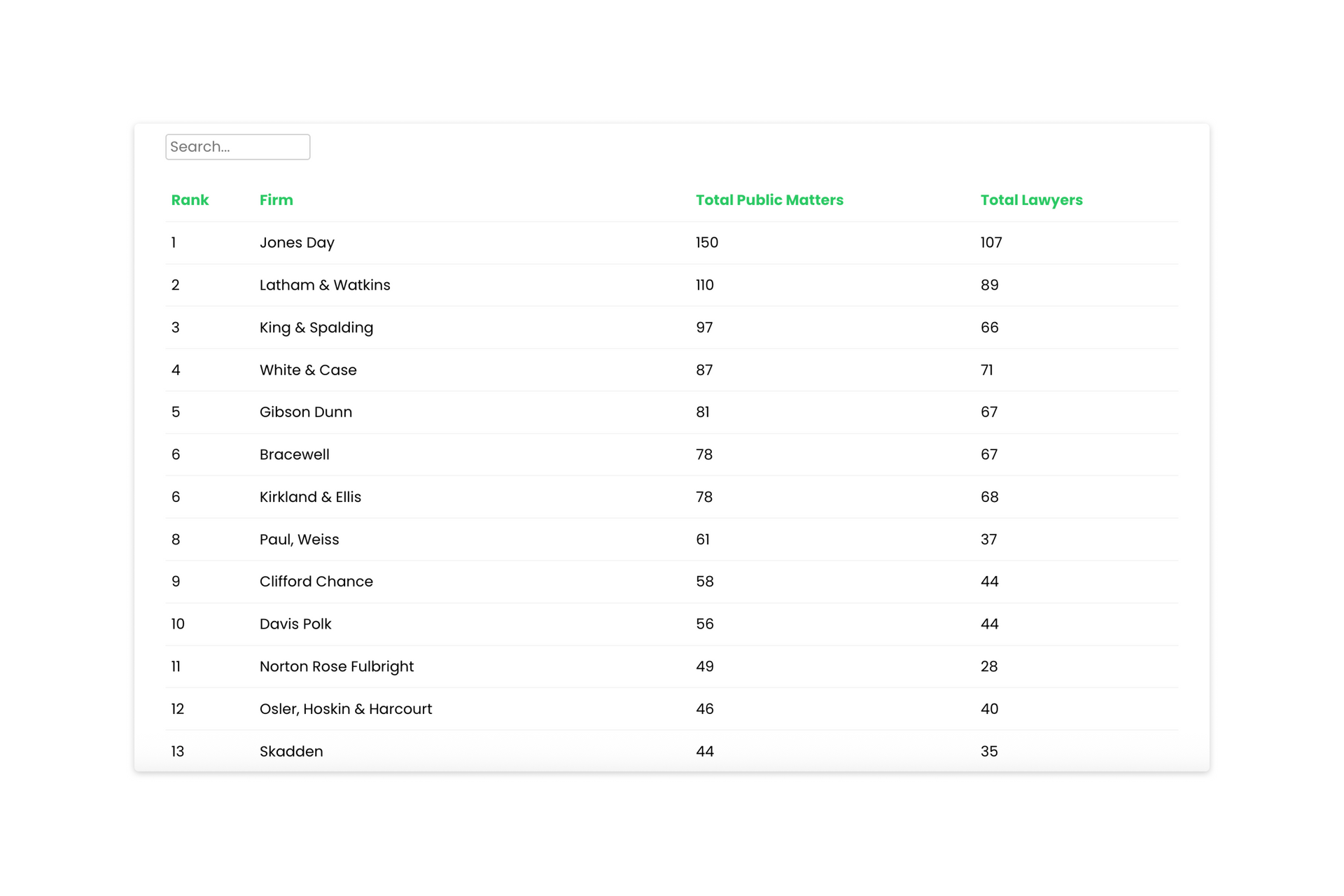
Table showing a list of names with corresponding numbers in two columns labeled
by Craig Savitzky 10 March 2026
Which law firms had already positioned themselves years earlier to capture what may become the largest energy legal market since post-invasion Iraq?